
Blog
How An Apartment Complex Trash Compactor Streamlines High-Volume Waste Disposal?
What if the smelliest, messiest part of your apartment complex was actually the key to saving money, keeping tenants happy, and running smoother operations? We’ve made it our mission to engineer smarter, cleaner, and more efficient ways to manage waste. From hospitals and universities to commercial spaces and multi-family housing, our systems don’t just handle garbage—they transform how waste is processed, moved, and managed across an entire property. One of our most effective tools in this effort is the trash compactor, designed to reduce volume, control odors, and streamline waste removal. Through our dedicated Waste Systems Division, we focus on high-density living environments like apartment complexes, where waste challenges multiply quickly and require thoughtful, reliable solutions. If you manage or live in an apartment complex, you probably know that dealing with waste isn’t just about getting rid of it; it’s about dealing with the constant fallout of overflowing bins, foul odors in the hallways, messy trash rooms, and complaints from frustrated tenants. It’s the unglamorous but unavoidable part of property management that can quietly eat away at budgets and resident satisfaction alike. And as cities grow more crowded, buildings taller, and regulations tighter, the pressure to solve this problem has never been higher. That’s where trash compactors come in, not as just another piece of equipment, but as a game-changing tool that transforms the entire waste management process. Apartment complex trash compactors compress waste at the source, drastically reducing volume, improving cleanliness, and cutting down on the number of pickups required. Cleaner common areas. Fewer pest issues. Less clutter. More peace of mind. Imagine replacing three dumpsters with one sealed compactor that handles the same volume, and then some. In this blog, we’ll dig into the core challenges apartment complexes face, explore how compactors solve them, and walk you through the features and benefits that matter most. We’ll also show you why The Mark-Costello Co. continues to be the go-to name in residential waste systems, because when it comes to trash, we believe smart handling creates better living. The Challenges of High-Volume Waste Disposal In Apartment Complexes Managing waste in a single-family home is straightforward. But take that system and multiply it across hundreds of households stacked into a multi-floor building, all sharing the same disposal areas, and suddenly you’re dealing with a complex, high-pressure operation. We’ve worked with enough property managers and building owners to know that apartment waste disposal isn’t just about taking out the trash; it’s about keeping an entire community clean, safe, and compliant. And in large residential buildings, that’s no easy feat. Apartment complexes generate a huge volume of waste on a daily basis. We’re not just talking about kitchen garbage and food scraps from individual units. Think about cardboard from bulk deliveries, packing materials from online shopping, plastic containers, broken furniture, and seasonal items like discarded holiday decorations. Add to that the waste generated from shared amenities like lounges, mailrooms, fitness centers, and common kitchens, and the pile grows fast. Now imagine that same scenario across 100, 300, or even 500 units, every day. When waste collection areas are undersized or overwhelmed, problems surface quickly. Overflowing bins lead to trash stacking up in hallways, spilled liquids attracting pests, and foul smells drifting through lobbies and stairwells. Even when maintenance staff work hard to stay on top of the mess, it only takes one long weekend, a missed pickup, or a building-wide move-in day for things to spiral. Tenants notice. Complaints rise. And the building’s reputation can take a serious hit. Space is another ongoing challenge. Most apartment complexes, especially those in dense urban areas, weren’t designed with sprawling waste management rooms or multiple large dumpsters in mind. The waste storage space you do have is often tucked in a basement corner or behind the building in a tight alley shared with neighboring properties. That makes it difficult to stage multiple bins, implement recycling properly, or accommodate the large volume of waste without creating a mess. Add to that the high cost of frequent waste pickups. Most waste haulers charge based on volume or pickup frequency, and when your bins are full after just a day or two, you’re looking at multiple hauls per week, each with its own invoice. And that doesn’t include the hidden costs: the hours maintenance staff spend cleaning, sorting, moving trash bags between floors, or chasing down unauthorized bulk items left behind. These inefficiencies create a ripple effect across your operations, increasing labor costs and draining already-tight budgets. The result? A system that constantly feels behind. You’re always reacting instead of staying ahead. And in an industry where tenant satisfaction, operational efficiency, and cleanliness go hand-in-hand, that’s a serious disadvantage. We understand these challenges because we’ve helped apartment communities across the country overcome them, with equipment designed specifically for environments just like yours. How Apartment Complex Trash Compactors Solve These Problems? Now let’s flip the script. Instead of overflowing bins, imagine a system that compresses all that waste at the source, quietly, safely, and efficiently. That’s exactly what apartment complex trash compactors are designed to do. We’ve seen the transformation firsthand. When a compactor is installed, everything about waste disposal gets easier. The main benefit of a trash compactor is simple: it reduces volume. A lot of volume. Loose bags and bulky items take up an incredible amount of space, even when they’re lightweight. By compressing this material into tightly packed, stackable blocks, a compactor allows you to store significantly more waste in the same footprint. In fact, we often see buildings cut their waste storage requirements in half or more. That means fewer bins cluttering the waste room, more room for recycling, and a more organized, hygienic disposal area. This reduced volume leads directly to fewer waste pickups. Instead of multiple hauls per week, you might only need one. That alone can save thousands of dollars over the course of a year, not to mention reducing truck traffic, noise disruptions, and the carbon emissions …
Continue reading “How An Apartment Complex Trash Compactor Streamlines High-Volume Waste Disposal?”
Why Investing in Waste Management Equipment Improves Operational Efficiency?
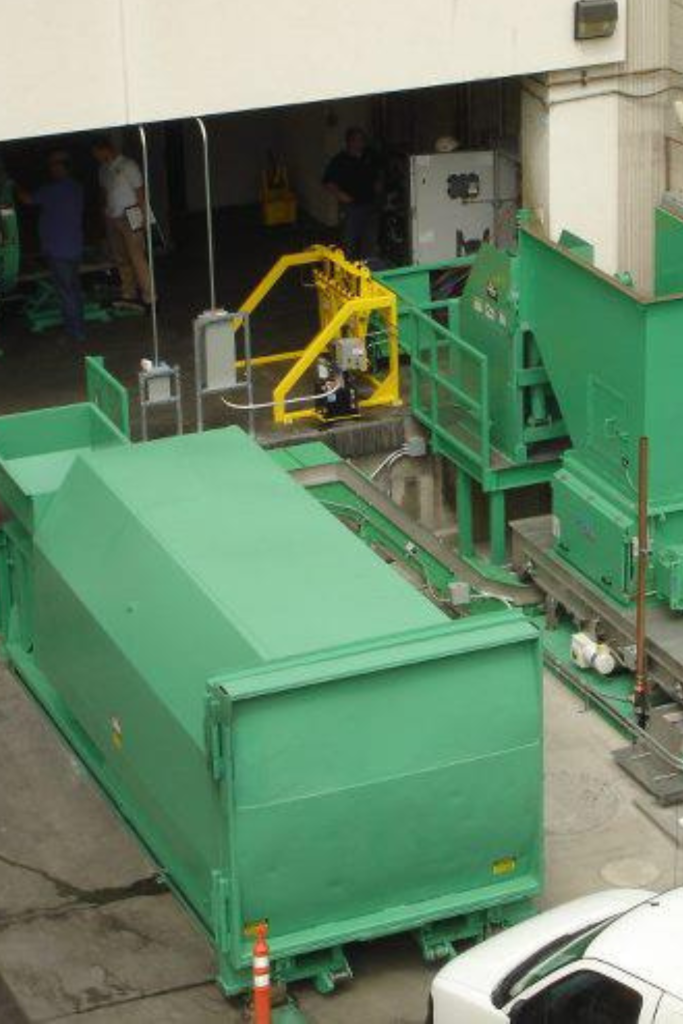
Every day, businesses across industries work tirelessly to optimize their operations, streamlining workflows, investing in automation, and cutting unnecessary steps from production lines. But there’s one area that often gets pushed to the back of the room, both literally and figuratively: waste management. Think about it. How much time, money, and manpower is being spent moving, sorting, and disposing of waste in your facility? And more importantly, what if that silent system in the corner is actually costing you more than it should? The right waste management equipment can make a massive difference—not just in efficiency, but in your bottom line. Investing in smarter, more reliable solutions can transform your waste handling process from an overlooked chore into a strategic advantage. We’ve spent over 60 years helping businesses uncover a surprising truth: waste is not just something to get rid of. It’s a key operational component that, when managed strategically, can unlock significant efficiency gains, cost savings, and sustainability wins. From healthcare facilities dealing with regulated medical waste to manufacturers managing packaging and scrap, waste touches every department. And yet, many organizations are still relying on outdated, manual, or patchwork systems that quietly slow them down, day after day. The real question is no longer “How do we dispose of waste?” but “How can waste handling make the rest of our operation run better?” Investing in the right waste management equipment, whether it’s a compactor, baler, sterilizer, or smart tracking system, can change the way your facility functions. It can reduce labor hours, streamline compliance, cut down hauling costs, and even open up physical space. Most importantly, it can take something reactive and turn it into a proactive part of your efficiency strategy. In this blog, we’re going to explore how smart investments in waste management equipment don’t just handle what’s thrown away, they help drive what moves your operation forward. Because once you stop treating waste as an afterthought, you start discovering real gains where you least expected them. Understanding Operational Efficiency In Waste Management Operational efficiency isn’t just a buzzword; it’s the heartbeat of any well-run facility. We define it as the ability to get more done using fewer resources, less time, less energy, less labor, and less waste. In the context of waste management, operational efficiency means processing materials quickly, safely, and in a way that minimizes disruption while maximizing output. When your waste systems are inefficient, they don’t just create clutter; they create bottlenecks that ripple through your entire operation. We’ve walked into facilities where overflowing bins block loading docks, where employees spend hours each week manually breaking down cardboard, and where outdated compactors require constant repair. These situations aren’t just inconvenient, they’re expensive. They lead to delays in production, injuries from repetitive lifting, and unnecessary use of skilled labor on tasks that could be automated. When waste piles up or disposal becomes unpredictable, teams are forced into reactive mode, which erodes productivity and morale. Efficiency in waste management also plays a major role in freeing up physical space. In many industrial or healthcare settings, real estate is at a premium. Every square foot taken up by unprocessed waste or inefficient disposal stations is space that can’t be used for operations, storage, or patient care. That’s why we believe that waste management should be treated as a core system, one that’s integrated into your workflow, just like logistics or inventory. It’s important to recognize that waste is a daily constant in every industry. Whether you’re handling packaging material, regulated medical waste, food scraps, or paper, your facility is generating waste at every turn. When you approach waste handling with an efficiency mindset, everything changes. Automated equipment removes the need for manual sorting and hauling. Smart system integration allows waste handling to be scheduled and tracked just like any other operational task. And with today’s technologies, businesses can monitor data in real time, using that information to fine-tune processes, reduce downtime, and improve safety. We’ve seen firsthand how these improvements help organizations run smoothly. It’s not just about having a better waste chute or a stronger compactor; it’s about embedding waste handling into your larger efficiency strategy. With the right equipment and systems in place, your operation becomes more agile, less wasteful, and far more resilient to the unexpected. The Importance of Investing In Waste Management Equipment If you’re looking for areas to trim operating costs and increase reliability, waste management is a smart place to start. We’ve helped businesses uncover inefficiencies hiding in plain sight, like paying too much for daily pickups, spending hours on manual sorting, or losing usable space to overflowing bins. The truth is, the right waste management equipment pays for itself faster than most people expect. High-quality compactors, balers, and sterilizers can significantly lower waste volume, reduce the number of hauls required, and shrink disposal fees in just months. Cost savings are only part of the story. Labor reduction is another huge benefit. In many facilities, valuable staff time is being spent moving bags of trash, breaking down recyclables, or navigating poor waste infrastructure. When you introduce equipment that automates these tasks, like a compactor that crushes waste at the source or a baler that preps recyclables for pickup, you’re freeing up staff to focus on higher-value work. Over time, this has a measurable impact on productivity and morale. No one wants to spend their day wrestling with garbage. Time savings are equally critical. In hospitals, where quick turnaround is essential, or in manufacturing facilities that depend on uninterrupted production lines, waste delays can cause serious setbacks. Our clients often report improved workflow speeds after installing our equipment because there’s less back-and-forth, fewer interruptions, and better coordination between departments. When waste handling runs like clockwork, your entire operation benefits from the smooth rhythm it creates. Then there’s the growing pressure of compliance. Regulations surrounding waste disposal, especially hazardous, medical, or industrial materials, are getting more stringent every year. A missed step or improperly handled load can result …
Continue reading “Why Investing in Waste Management Equipment Improves Operational Efficiency?”
How a Consolidated Sterilizer Autoclave Ensures Consistent Medical-Grade Sterility?
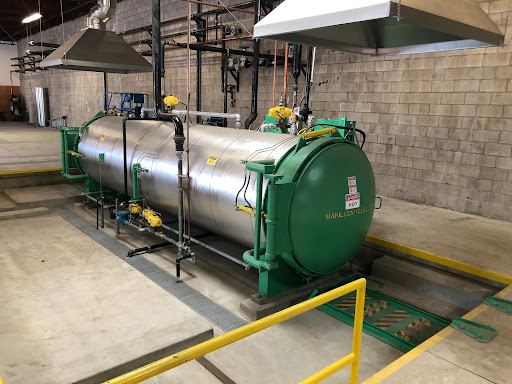
We’ve spent decades designing and building systems that solve real-world challenges in waste management and sterilization. Our work is rooted in engineering excellence and a deep understanding of what hospitals, labs, and clinics truly need: consistent, dependable, and compliant solutions that don’t cut corners. One of the most powerful tools in our lineup is the consolidated sterilizer autoclave, a solution that not only ensures sterility but does so with efficiency, traceability, and long-term reliability. A consolidated sterilizer autoclave is more than just a steam chamber. It’s an advanced system built to deliver medical-grade sterilization for everything from surgical instruments to regulated medical waste. In today’s healthcare environment, where the margin for error is non-existent, this kind of system becomes essential. Our commitment at The Mark-Costello Co. has always been to support healthcare providers with equipment that performs flawlessly day after day, cycle after cycle. Let’s explore what makes this technology vital and how we continue to lead the way. Understanding Why Sterilization Matters In Every Medical Setting Sterilization is the backbone of any safe, functioning healthcare environment. Without it, even the most advanced surgical tools and procedures become potential hazards. At The Mark-Costello Co., we understand that sterilization isn’t just about hitting temperature targets; it’s about protecting people. At its core, sterilization means eliminating all microbial life, including bacteria, viruses, spores, and fungi. These microscopic organisms, while invisible, carry enormous risks when introduced into clinical settings. That’s why every item used in patient care, from scalpels and gauze to PPE and laboratory glassware, must go through a reliable sterilization process before use. What makes sterilization so critical isn’t just the science behind it; it’s the role it plays in preserving trust and safeguarding health. Patients don’t walk into a clinic or operating room asking whether the tools have been properly sterilized; they assume they have. That unspoken trust is earned through the quiet, consistent work happening behind the scenes. We design our systems knowing that when you place something inside one of our sterilizers, you’re not just processing materials, you’re protecting human lives. It’s a responsibility we don’t take lightly. Still, despite the importance of sterilization, consistency is often a challenge. Hospitals and labs may struggle with outdated equipment, under-trained staff, or irregular maintenance schedules that lead to sterilization failures. In some cases, steam may not fully penetrate wrapped instruments, or uneven chamber heat could leave cold spots. The consequences of just one faulty cycle can be significant, leading to canceled procedures, cross-contamination, and in extreme cases, hospital-acquired infections. That’s where consolidated sterilizer autoclaves step in and make a measurable difference. We’ve built our consolidated systems to help eliminate these risks by streamlining sterilization into a reliable, repeatable, and verifiable process. By automating complex steps, reducing room for human error, and incorporating real-time monitoring, our equipment brings a level of predictability that’s essential in medical environments. Whether you’re sterilizing daily instruments or treating infectious medical waste, our systems help make sure every cycle delivers the same high standard, because lives depend on it. How Consolidated Autoclaves Work To Deliver Medical-Grade Sterility? The sterilization process might seem simple on paper: steam, pressure, heat, time, but achieving true medical-grade sterility is anything but casual. Autoclaves work by exposing materials to high-pressure saturated steam, typically at temperatures ranging from 121°C to 134°C. This exposure must be sustained for a specific period, depending on the load type, to ensure the complete destruction of all pathogens. The science is straightforward, but what really matters is flawless execution. That’s where most failures occur, and that’s where our consolidated autoclaves excel. Inside an autoclave chamber, every surface of every object must receive uniform exposure to the sterilizing agent. Even minor inconsistencies in temperature, pressure, or cycle duration can lead to incomplete sterilization. We’ve seen how small mistakes, like poorly loaded chambers or equipment that’s not properly maintained, can render a cycle ineffective. In critical settings like operating rooms or clinical labs, that’s a risk no one can afford to take. That’s why we’ve engineered our consolidated sterilizer autoclaves with precision at every level. Our systems are designed to handle a wide range of sterilization needs, from porous textiles and complex surgical instruments to dense, tightly packed medical waste bags. We’ve engineered these autoclaves to optimize steam penetration and eliminate cold spots through intelligent chamber design and uniform steam distribution. This ensures that whether you’re sterilizing a single tray of instruments or a full load of regulated medical waste, the results are consistent and thorough. We don’t just manufacture sterilizers, we refine them. Our consolidated autoclaves are equipped with pre-programmed cycles based on rigorous industry standards, ensuring each load is treated with the exact conditions required for complete sterilization. We also integrate real-time monitoring systems that track temperature, pressure, and cycle duration with pinpoint accuracy. These monitoring tools don’t just enhance control; they offer full traceability and accountability, which are critical for regulatory compliance and internal quality assurance. What truly sets our systems apart is their reliability. We know that in a busy hospital, you don’t get second chances. That’s why we’ve built our autoclaves to perform at a high level under real-world conditions. Our goal is to take the guesswork out of sterilization, offering a system that doesn’t just work, it works every time. Medical-grade sterility isn’t just a checkbox to us; it’s the foundation of everything we do. Designed For Performance, Built For The Real World We design consolidated sterilizer autoclaves not just for ideal lab conditions, but for the real-world demands of modern hospitals, clinics, and research facilities. Our systems are built to perform with unwavering reliability under pressure, during back-to-back cycles, and across varying load types. From the start, our mission has been to take the complexity out of sterilization without compromising performance. We do this by embedding intelligence into every part of our design, so operators can focus on patient care, not deciphering complicated machinery. Our autoclaves feature intuitive interfaces with programmable logic controls that simplify even the most rigorous sterilization protocols. …