Category Archives: Uncategorized
Does Your Facility Truly Have the Regulated Waste Compliance Equipment That Auditors Expect to See
Imagine an inspector walks through your door tomorrow morning, clipboard in hand, ready to review every step of how you treat and document waste. Would your setup hold up, or would you be scrambling? Regulated waste compliance equipment is the difference between a calm, confident inspection and a stressful one, yet many facilities only discover the gaps after a violation lands. This guide lays out a clear picture of what auditors look for, where equipment commonly falls short, and how to build a setup that turns inspections into a formality. Read it as a checklist you can measure your own facility against. What Auditors Are Really Looking For Inspectors care about two things above all. First, can you prove your waste was treated properly, and second, can you show the records to back it up? They want evidence that infectious and regulated materials reached true treatment conditions, that the equipment performs as intended, and that staff follow the process every time. Documentation ties it all together, because a perfect machine means little without the logs that prove it ran correctly. The rules behind those expectations come from several directions. The EPA’s medical waste guidance points facilities toward state programs, and in California, the Medical Waste Management Program at the Department of Public Health inspects and permits facilities, including those that treat waste on-site. Knowing which agency holds authority over your operation is the starting point for any compliance plan. Inspectors also pay close attention to consistency over time. A single clean cycle log proves little if the records around it are patchy, so auditors look for an unbroken history that shows the facility treats waste correctly every day, not just on inspection day. They check that the equipment in use matches what the facility registered, that staff can explain the process without hesitation, and that the paper trail lines up with what they see on the floor. A facility that can answer those points calmly signals a well-run operation, and that impression carries real weight during a review. The Equipment Gaps That Trigger Violations Most compliance failures trace back to a handful of equipment problems. Aging units that no longer hit reliable treatment temperatures, missing or broken monitoring tools that leave cycles undocumented, and treatment methods that a state no longer recognizes all invite trouble. An inspector who cannot see a clear, verifiable record of proper treatment has little choice but to flag the facility. These gaps tend to widen quietly. A sensor drifts out of calibration, a logging feature goes unused, or a unit limps along past its useful life because replacing it never reaches the top of the list. The fix is rarely dramatic. Reliable treatment equipment, working monitors, and a steady supply of sterilizer parts keep the whole system audit-ready instead of audit-anxious. Process gaps deserve the same attention as equipment gaps. An inspector who sees a well-maintained machine still expects to see trained staff, clear written procedures, and labeled, secured storage that matches the rules. Many violations come not from a broken autoclave but from a missing logbook, an unlabeled accumulation area, or a step that one shift performs differently from the next. Equipment and procedure work as a pair, and a strong facility treats them that way, so the hardware and the habits both stand up to scrutiny. Building a Setup That Passes Without Panic A compliant operation rests on three pillars. Start with dependable sterilization or treatment equipment that consistently reaches and holds the right conditions. Add cycle monitoring and reporting so every load produces a record that an inspector can read at a glance. Finish with routine maintenance and ready access to replacement parts, so a small mechanical issue never grows into a treatment failure. Mark-Costello builds its equipment with exactly this in mind. The full line of medical waste sterilizers delivers repeatable treatment, and the broader approach to processing medical waste pulls treatment, monitoring, and material handling into one defensible workflow. When the equipment is designed around compliance from the ground up, passing an audit stops feeling like a gamble. Why Compliance Protects More Than Your License It is tempting to view compliance as a box-ticking exercise that keeps regulators happy. The truth runs deeper. Proper equipment protects the staff who handle waste every day, it safeguards the public from infectious and hazardous material, and it shields the facility from fines, shutdowns, and reputational damage. A strong compliance posture is really a strong safety posture, and the two reinforce each other in ways that pay off long after the inspector leaves. Consider what a serious violation actually costs. Beyond the financial penalty, a facility may face a temporary loss of its on-site treatment privileges, which forces expensive off-site hauling while the problem gets fixed. Word travels, and patients, partners, and the surrounding community notice when an institution mishandles dangerous waste. Set against those stakes, the investment in reliable equipment and steady documentation looks less like a cost and more like insurance. Facilities that internalize this rarely cut corners, because they understand that the price of a shortcut almost always exceeds the price of doing it right. Turning Compliance Into a Routine Instead of a Scramble The facilities that breeze through inspections share one habit. They treat compliance as a daily routine rather than a last-minute project. Cycle logs get reviewed regularly, not just before an audit. Maintenance happens on a schedule, not after a breakdown. Staff training stays current, so every shift handles waste in the same correct way. When these practices run in the background all year, an inspection becomes a snapshot of normal operations rather than a stressful performance. Building that routine is easier when the equipment supports it. Units that log every cycle automatically, flag maintenance needs early, and rely on parts that a facility can actually get hold of make good habits almost effortless. The opposite is also true, because equipment that fights the user encourages shortcuts, and shortcuts are what audits expose. Choosing systems designed around …
On-Site Medical Waste Sterilization: How Hospitals Can Cut Treatment Costs by Thousands
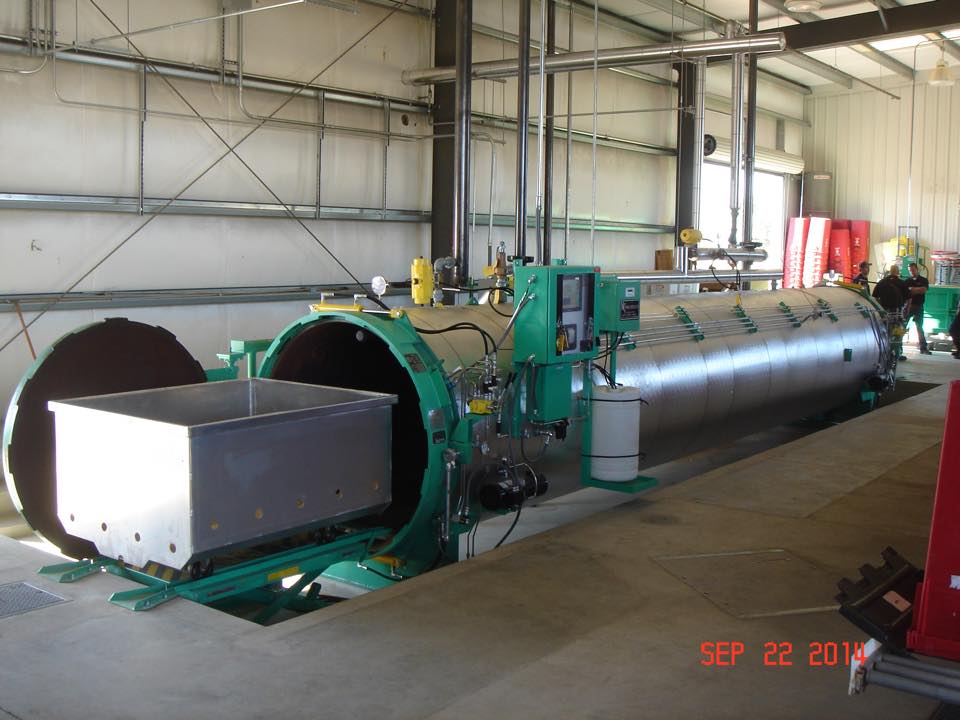
Every month, hospitals across the country write large checks to third-party medical waste haulers without questioning whether there is a better option. On-site medical waste sterilization offers a fundamentally different approach, one where facilities treat their own regulated waste, reclassify it as ordinary solid waste, and dramatically reduce what they pay for disposal. For many hospitals, the shift from off-site hauling to on-site treatment represents one of the most significant operational cost reductions available, without changing a single clinical practice or patient care protocol. Why Off-Site Medical Waste Disposal Keeps Getting More Expensive The cost structure of off-site regulated medical waste disposal works against high-volume generators in almost every way. Third-party haulers charge by the pound or by the container, and rates for regulated medical waste run substantially higher than for ordinary commercial trash. On top of per-unit pricing, facilities also absorb pickup frequency fees, fuel surcharges, compliance documentation costs, and, in many cases, minimum service contracts that do not flex when waste volume drops. The EPA notes that regulated medical waste requires specific handling, documentation, and treatment methods across the entire chain from generation to final disposal. Every link in that chain carries a cost, and off-site vendors pass all of it back to the generating facility, along with their margin. What makes this particularly frustrating is that the waste haulers often collect it in a way that poses little active risk by the time it reaches a remote treatment facility. Sterilization, the same process an on-site autoclave performs in a matter of hours, is what makes regulated waste safe. Facilities paying a hauler to transport their waste across town and process it through an autoclave at a remote location are effectively funding transportation, handling, and vendor profit on top of the treatment itself. Bringing that treatment inside removes every one of those added costs from the equation. What On-Site Medical Waste Sterilization Actually Changes On-site medical waste sterilization moves the treatment step inside the facility. A sterilizer or autoclave installed on-site treats regulated waste before it leaves the building. Once treated, that waste exits the regulated stream and qualifies, in most states, as ordinary municipal solid waste that standard haulers pick up at a fraction of what specialized medical waste haulers charge. The change is fundamental. Instead of paying premium rates to a regulated waste hauler for collection, transport, and treatment, a facility pays the operating costs of its own equipment plus standard solid waste disposal fees for the treated output. For facilities generating significant regulated waste volume, the financial shift is substantial and begins immediately after the system goes into service. Beyond direct cost reduction, on-site treatment gives facilities meaningful operational control. Pickup schedules, storage requirements, and chain-of-custody documentation all become simpler when treatment happens in-house. Facilities no longer depend on a single vendor’s schedule, pricing decisions, or capacity constraints. Breaking Down Where the Savings Actually Come From The financial case for on-site medical waste sterilization rests on several overlapping savings that compound over time. Hauling cost reduction is the largest single saving. Regulated medical waste hauling costs significantly more per pound than ordinary solid waste disposal. When treated waste exits the regulated stream, a facility shifts that volume to a standard waste contract at dramatically lower per-unit costs. For hospitals generating hundreds or thousands of pounds of regulated waste each month, that difference accumulates quickly. Volume reduction through size reduction equipment adds another layer of savings. Autoclaved waste is still physically bulky. Running treated material through a medical waste size reduction system compresses and shreds it into a much smaller volume, reducing both the weight and cubic yardage that goes to disposal. Less volume means fewer pickups, and fewer pickups mean lower ongoing disposal costs month after month. Reduced handling labor follows from fewer specialized pickups and simpler logistics. Less time managing regulated waste containers, coordinating with haulers, and completing chain-of-custody paperwork means staff attention and labor hours redirected toward clinical and operational priorities. Cost predictability replaces the variability of hauler pricing. Hauler rates can shift with fuel costs, regulatory changes, or contract renegotiation cycles. Equipment operating costs, by contrast, are largely fixed and foreseeable, making multi-year budget planning substantially more reliable. For most facilities, equipment investment pays back within two to four years. After that, the savings continue for the full operational lifespan of the system, which, with proper maintenance, typically spans two decades or more. What a Complete On-Site Treatment System Looks Like A fully functional on-site medical waste sterilization setup involves more than a single autoclave. A well-designed system integrates several components that work together to move waste safely, efficiently, and in compliance with applicable regulations. The sterilizer or autoclave forms the core treatment unit. The medical waste autoclave needs to be sized for the facility’s daily and peak waste volumes, with enough cycle capacity to process incoming waste without creating a backlog in storage areas. Cart dumpers and loading equipment allow staff to transfer waste from collection carts directly into the autoclave without handling individual bags manually. This protects workers from exposure risk, speeds the loading process, and reduces the chance of container damage or spills. Post-treatment shredders or grinders reduce treated waste volume and render treated material unrecognizable before it enters the solid waste stream. Conveyors can move treated waste automatically from the autoclave to the shredder, eliminating additional manual handling steps. Control and monitoring systems log cycle data automatically, capturing temperature, pressure, and dwell time for every treatment cycle. This creates the compliance documentation regulators require and simplifies the recordkeeping burden that falls on facility staff. The medical waste disposal systems that bring these components together into an integrated workflow deliver better outcomes than assembling components piecemeal from multiple vendors, because each element is selected and configured to work efficiently with the others. Navigating Permits and Compliance for On-Site Treatment Permitting is a legitimate consideration that facilities should address early in the planning process. State requirements vary considerably. Some states require a specific permit …
Effective Regulated Waste Management Is Paramount For Local Businesses

Failure to comply with waste regulations can cost California businesses thousands of dollars—often far more than investing in the right systems upfront. In Paramount, whether you run a healthcare clinic or a manufacturing plant, the question is the same: how do you manage regulated waste safely, cost-effectively, and legally without harming your bottom line? Local companies have a responsibility to keep employees safe, protect the community, and comply with a maze of complex requirements from state, federal, and global agencies. The solution lies in updated systems and expert guidance to ensure safety, compliance, and sustainability. In this blog, we will discuss how Waste Management Services in California help local businesses streamline operations, avoid costly risks, and stay ahead of current and future standards. What Regulated Waste Means for Paramount Businesses Regulated waste encompasses a wide range of materials, each requiring special handling: Medical and biohazardous waste such as sharps, blood-soaked materials, and infectious items generated by healthcare providers. Hazardous industrial byproducts including chemicals, solvents, and residues from manufacturers. Pharmaceutical or lab waste such as expired medications, test kits, and laboratory materials. Electronics and recyclables including batteries, fluorescent bulbs, and e-waste requiring certified disposal. For businesses in Paramount, the stakes are high. Compliance is required under California’s strict environmental rules, alongside federal standards from the EPA and OSHA. Even small mistakes—like improper labeling or storing of medical waste—can result in hundreds of thousands of dollars in fines. Even small businesses such as dental clinics or pharmacies risk penalties with improper handling. That is why Waste Management Services in Paramount operate under stringent guidelines to protect businesses and the community. Challenges Local Businesses Face Businesses in Paramount face unique challenges when managing regulated waste: Limited Storage: Small and medium-sized businesses often lack space for long-term waste holding. Containers fill quickly, creating safety hazards. Overlapping Regulations: Requirements from multiple agencies create confusion for business owners. Rising Costs: Transportation, treatment, and disposal costs continue to increase, pushing businesses to seek affordable alternatives. Need for Seamless Solutions: Waste systems must integrate smoothly into operations without adding liability or extra workload. Effective Waste Management Solutions Paramount businesses can access a variety of specialized solutions: On-Site Sterilizers & Autoclaves: Used by healthcare providers to destroy biohazardous waste before transport, reducing exposure risks. Compactors & Shredders: Reduce waste volume, cut pickup frequency, and securely destroy confidential pharmaceutical or lab waste. Balers & Recycling Systems: Help retailers, warehouses, and manufacturers recycle cardboard, plastics, and metals while saving storage space. Tracking & Monitoring Systems: Tools like TrashMinder prevent overfilling and provide automatic documentation for compliance audits. Custom Conveyor & Transfer Systems: Allow manufacturers to move regulated waste efficiently within facilities before storage or treatment. Steps to Implement an Effective System Local Waste Audit: Identify waste streams, volumes, and compliance requirements. Tailored Equipment Design: Choose the right compactors, balers, or autoclaves based on business needs. Installation & Training: Partner with providers who deliver turnkey installation and employee training. Ongoing Support & Maintenance: Rely on local service providers to reduce downtime and keep equipment ready. Documentation & Reporting: Store compliance documents within the system so reports are readily available during inspections, minimizing administrative burden. Benefits for Paramount Businesses Businesses that manage regulated waste effectively gain more than compliance. Long-term benefits include: Compliance Confidence: Avoid fines, pass inspections, and maintain a strong reputation. Cost Savings: Lower hauling costs, fewer pickups, and reduced emergencies mean long-term savings. Health & Safety: Protect employees, customers, and the community from exposure to hazardous waste. Sustainability: Align with California’s environmental goals while demonstrating corporate responsibility. Peace of Mind: Focus on business growth knowing waste is being handled properly. Real-World Applications Different sectors in Paramount benefit from waste management solutions every day: Healthcare Clinics: Use autoclaves to sterilize biomedical waste on-site while staying compliant. Food & Beverage Processors: Compactors minimize bulk waste, keeping spaces cleaner and more efficient. Retail & Warehousing: Balers make recycling cardboard and plastics easier, promoting safe and sustainable operations. Small Manufacturers: Shredders and monitoring systems simplify waste planning and compliance. Final Thoughts Regulated waste management in Paramount protects businesses from risk, ensures compliance, and creates growth opportunities. With tailored solutions, companies can reduce costs, protect their staff, and support community safety while meeting California’s environmental regulations. The Mark-Costello Co., based in Paramount, has partnered with California businesses for decades. We provide reliable equipment, professional installation, and ongoing support to keep local waste management safe and compliant. We are ready to be your trusted partner in Waste Management Services. Michael KelleherMichael Kelleher is an experienced content strategist at The Mark-Costello Co, with over five years of expertise in creating compelling, data-driven content for diverse industries. His focus on delivering high-quality blog posts and content strategies has helped businesses elevate their online presence and connect with their target audience effectively. www.mark-costello.com/