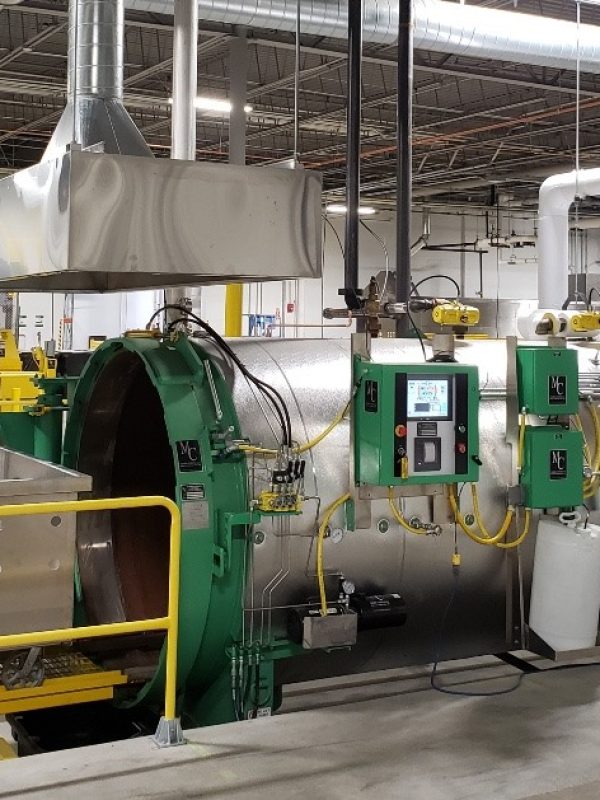
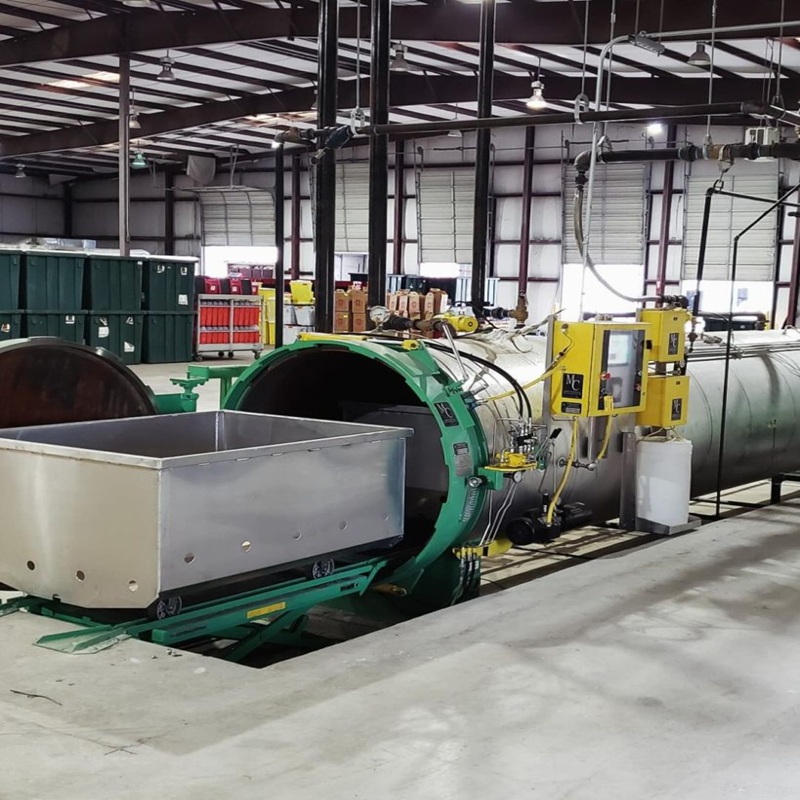
Understanding the range of available technologies is essential for selecting the right system for your facility's volume, waste categories, and physical footprint. Autoclaves and Steam Sterilizers Steam sterilization through autoclave technology remains the most widely accepted method of treating regulated medical waste. Autoclaves use high-pressure steam to render biological materials non-infectious, after which the treated waste can be handled as ordinary solid waste. Modern high-capacity autoclaves can process entire carts of red-bag waste in a single cycle, and automated loading systems reduce manual handling to an absolute minimum. These systems are validated through biological indicator testing, providing auditable proof of efficacy that satisfies both state health departments and accreditation bodies. Medical Waste Shredders and Grinders Size reduction is a critical component of a complete medical waste processing system. Shredders and grinders break down treated waste into an unrecognizable mass, ensuring that no regulated materials can be retrieved or misused after treatment. Industrial-grade shredders designed for hospital waste streams are built to handle everything from soft red-bag materials to harder plastics found in single-use device packaging. When combined with sterilization upstream in the process, shredding produces a compact, anonymous output that can flow directly into a facility's general waste compaction stream. Integrated Disposal Systems The most efficient facilities do not treat their medical waste in isolation. They integrate sterilization and size reduction into a continuous workflow that ends with compaction and containerization. This full-system approach minimizes labor touchpoints, reduces floor space requirements, and creates a smooth, auditable process from collection through final disposal. Cart Dumpers and Automated Feed Systems Large hospitals and medical centers generating high volumes of regulated waste benefit enormously from cart dumpers and automated feed systems that load waste into autoclaves without requiring staff to physically handle full containers. These systems reduce worker fatigue, minimize injury risk, and accelerate throughput during peak generation periods.
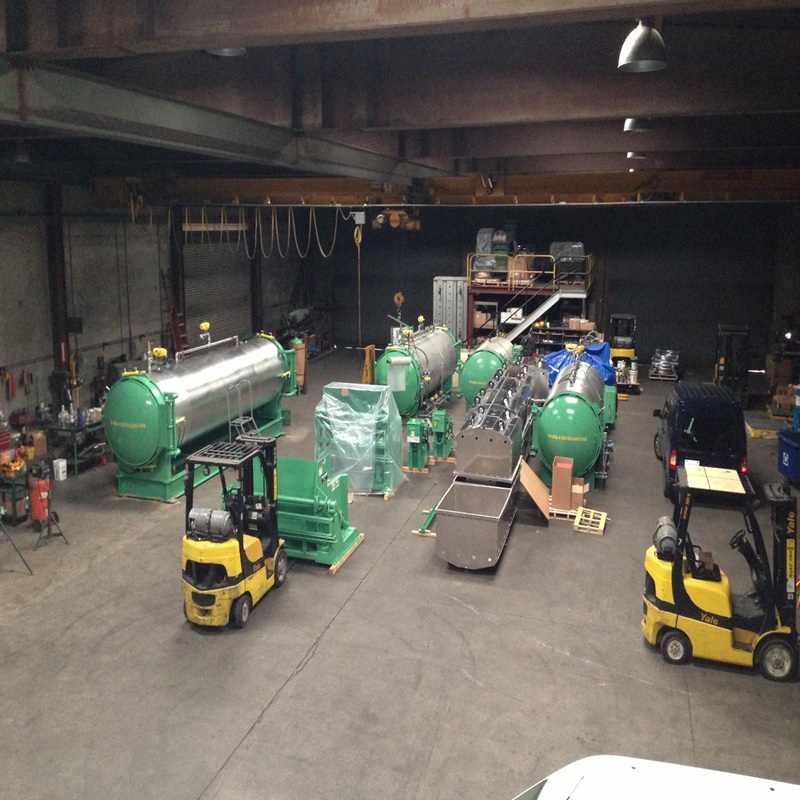
Mark Costello has been a trusted name in waste management for decades, delivering reliable and effective solutions that businesses count on.
Using the latest technology, We ensures that waste management systems are efficient and up to industry standards, from food digesters to compactors.
At Mark Costello,we provides tailored waste management solutions that fit each business’s unique needs, ensuring a smooth integration into existing operations.
Mark Costello is dedicated to helping businesses achieve their sustainability goals by turning waste into valuable resources, supporting a greener future.
Send us a message with your questions or concerns and our team member will contact you. We’d love to hear from you.
Dear Mr. Markle,
I have been working in the Plant Operations of Hospitals for the past 20 years. During that time I have had the responsibility of maintaining various autoclaves for the treatment of biohazardous medical waste.
When I came to Doctors Medical Center a year and a half ago I found myself in charge of maintaining a Mark-Costello Co. autoclave that was nearly eight years old. After my past experience of trying to keep a high vacuum system with consistent problems in operation, I find maintaining the Mark-Costello gravity fed autoclave a pleasure, as there is seldom a malfunction. I attribute this to the fact they have kept the design simple with no need for highly technical maintenance and high dollar repair parts.
As a point of information, the Model we operate is a AS 512 equipped with a unique “pull out drawer” making it easy for the Housekeeping Staff to load. This unit has a capacity of approximately 750 lbs. per cycle.
We expect to keep our Mark-Costello autoclave in operation for another 8 years or longer !
Dear Mr. Markle:
San Ramon regional Medical Center has owned and operated a Model AS46 Mark-Costello Medical Waste Sterilizer for the past eight years. We are pleased with performance of this equipment and have had a fine working relationship with the Mark-Costello Company. The system continues to function well and allows our facility to avoid the liability and high cost of packaging and hauling untreated infectious waste.
We Anticipate several more years of operation from this waste treatment system
Saludos,
La presente es para agradecer sus servicios a nuestra compañia. Su equipo de trabajo ha sido muy atento y diligente en las gestiones realizadas. Estamos muy complacidos con el equipo, el precio y la calidad de sus servicios.
Esperamos seguir contando con una excelente relacion de negocios en un futuro muy cercano.
Greetings,
This letter is to thank you for your services to our company. Your teamwork has been very attentive and diligent in the way it has been carried out. We are very pleased with the teamwork, the price and the quality of your services.
We expect to continue an excellent business relationship with you in the near future.
To whom it may concern,
Pleased with the equipment
We are quite pleased with our Mark-Costello sterilizer. The sterilizer has been working fine for many years. We recently purchased additional equipment from them, and are impressed with their response time and friendly service. We hope to continue a great working relationship with Mark-Costello in the future for additional pieces of equipment.
“It’s been a great relationship with The Mark-Costello Company; they are very dependable to all of our waste handling requirements and have made us aware of the importance of recycling and the upcoming waste handling issues in the future.”
“We have been very pleased with the performance and the cost savings that the trash compactors from The Mark-Costello Company have provided to our school district.”
My name is David E. and I am responsible for a Mark Costello Co. Auto-Clave, at an inflight Kitchen out here in Kona Hawaii, that is overseen by the USDA / Custom and Borders, federal inspectors. (as you can imagine that is a challenge in its self).
The products that Mark Costello Co. is producing are of good quality. The auto – clave that I am responsible for works 24/7, with very few break downs. This is the only unit available in Kona, making daily operation is critical.
It is nice to know that when I call for tech support and parts, the courteous staff always responds promptly. Being out here in the middle of the pacific, that is crucial to our operation.
I would highly recommend Mark Costello Co.
Most on-site systems are designed to treat regulated medical waste categories, including infectious waste (red-bag materials), sharps, laboratory cultures, isolation waste, and some categories of pathological waste. Pharmaceutical waste, chemotherapy waste, and radioactive materials typically require separate specialized handling and are generally not processed through standard autoclave or shredder systems. Always confirm your waste categories with your equipment supplier and your state regulatory agency before system selection.
Steam sterilization is the most widely validated and universally accepted method for treating regulated biological waste. It uses no chemicals, produces no hazardous emissions under normal operation, and generates a verifiable treatment record through biological indicator testing. Alternative technologies, such as microwave treatment and dry heat systems, exist but are approved in fewer jurisdictions and may require additional validation. Autoclaves represent the standard of care in on-site medical waste treatment for most healthcare facilities.
Space requirements vary widely depending on system configuration. A compact standalone autoclave can fit in a dedicated utility room with a footprint as small as 100 to 150 square feet, while a fully integrated line with cart dumpers, a large-capacity autoclave, a shredder, and a compactor may require 500 to 1,000 or more square feet of dedicated space. Ceiling height, floor load ratings, utility connections for steam or electrical supply, and ventilation are all factors that affect the feasibility of a given configuration.
Yes, particularly for facilities generating consistent daily volumes of regulated waste. Even medium-sized outpatient surgery centers and specialty clinics can see meaningful cost savings by moving away from per-pound hauling contracts. The break-even point depends on current disposal costs, waste volumes, and the specific equipment investment. A detailed financial analysis comparing current disposal expenditures against equipment acquisition, installation, and operating costs will give a clear picture of the payback period for your specific situation.
Regular maintenance is essential for both performance and regulatory compliance. Autoclaves require periodic calibration of temperature and pressure sensors, replacement of door gaskets and seals, and regular biological indicator testing to verify treatment efficacy. Shredders and grinders require blade inspection and replacement on a schedule tied to throughput volumes. Most reputable equipment suppliers offer preventive maintenance agreements that include scheduled service visits, parts replacement, and technical support, reducing the burden on in-house facilities staff and ensuring that equipment stays within validated operating parameters.