
Medical & Hospital Waste Size Reduction
Reduce your processing volume and save on disposal costs.
Issues to Consider when Evaluating the Vecoplan Equipment as it Compares to other Manufacturers in the Medical Waste Industry.
The majority of size reduction systems in the medical waste industry, regardless of brand name, are designed and operate with double, contra-rotating shafts with hook-like cutters ground to a sharp edge. These systems may each perform the task sufficiently as long as the cutters do not repeatedly come in contact with the abrasive non-shreddable materials, which is the most serious concern when processing medical waste.
Cutters with this design must be reground when they get dull or replaced when they break. These units must be disassembled from the top of the shredder. It is not unusual to have twisted or broken shafts. Often times the shafts and cutters must be lifted out with a hoist.
Hook shaped cutters can break at the hook, or even split in half.
Abrasive materials, such as tough plastic, will tear the sharp cutting edges into rounded, dull, cutting edges.
Time and materials involved can run into thousands of dollars, not to mention the down time that may require special hauling of untreated waste at higher than usual costs.
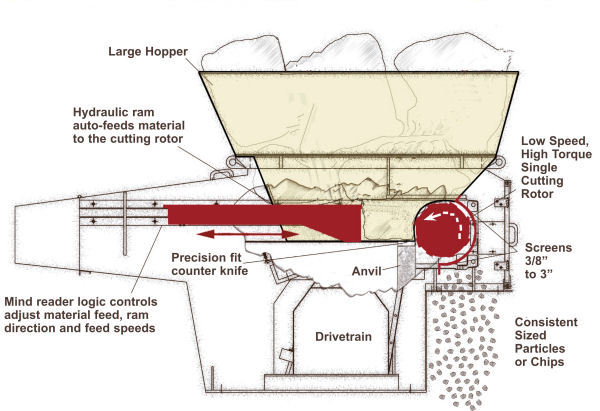
The Vecoplan medical waste rotary grinder utilizes a side push-arm ram that eliminates “bridging.” It allows a much larger hopper and feed opening than traditional systems. It pushes all the material into the rotating cutters. The PLC electronic controls can “feel” the resistance of the material and adjust its pushing force accordingly. Most systems are equipped with vertical rams and may cause materials to bounce. All other shredders must have their hoppers neck down to the size of the cutting chamber.
View our Medical Waste Sterilizer brochure.
For more information and immediate assistance with your hospital waste sterilization and medical waste processing needs, please contact Mark-Costello Co. today.